





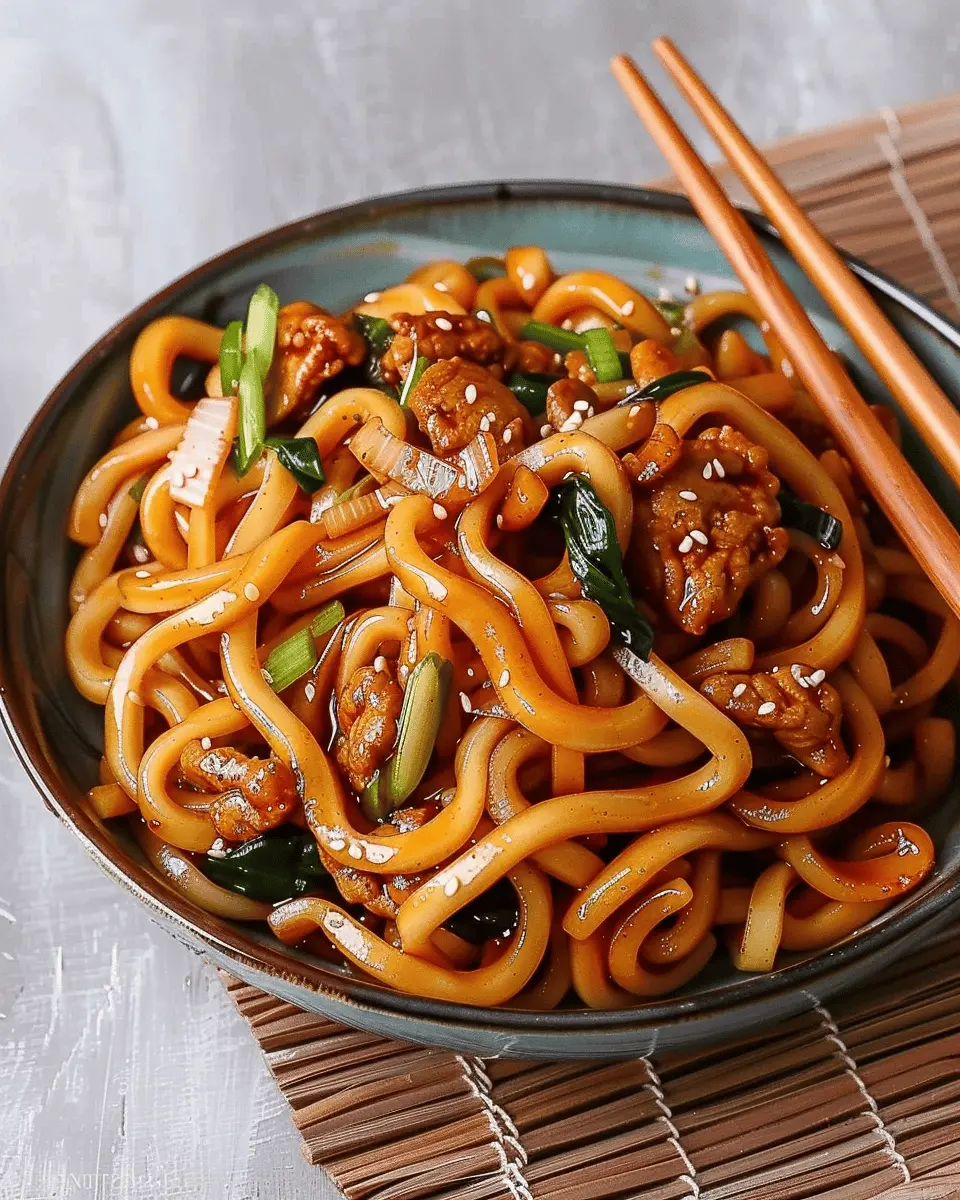
Introduction to Yaki Udon
What is yaki udon and why you should try it?
Have you ever craved a dish that effortlessly combines comfort and flavor? Look no further than yaki udon! This delectable Japanese stir-fried noodle dish features thick udon noodles tossed with a vibrant mix of vegetables and proteins, resulting in a bowl that’s both satisfying and wholesome.
So what sets yaki udon apart? It’s all about the texture and the unique flavors that come from stir-frying. Unlike traditional noodle dishes, yaki udon is typically prepared over high heat, giving the noodles that signature smoky char. This technique brings out the umami notes of the ingredients, making every bite a delightful experience. If you’re curious about the cultural significance of yaki udon, you might find it interesting that these stir-fried noodles originated from the Osaka region, thriving in local eateries. You can dive deeper into the history and varieties of udon at resources like Nippon.com.
Why should you give yaki udon a shot?
Think about the last time you wanted something quick yet nourishing for dinner. Yaki udon is your answer! Here’s why you should give it a try:
- Versatile Ingredients: You can easily customize yaki udon with your favorite proteins. Whether you choose turkey bacon, chicken ham, or even beef, the options are endless. Add seasonal vegetables and you’ve got a well-rounded meal.
- Quick & Easy: Perfect for busy young professionals, this dish can be thrown together in under 30 minutes. Who wouldn’t want an authentic and tasty meal without hours spent in the kitchen?
- Health Benefits: Made with udon noodles and fresh vegetables, yaki udon is not just delicious but also nutritious. Udon is low in fat and high in carbohydrates, making it a hearty option that can fuel you for the day ahead.
If you haven’t tried yaki udon yet, you’re missing out on a dish that beautifully captures the essence of Japanese cuisine. Let’s explore the recipe together so you can bring this amazing meal into your home!
Ingredients for Yaki Udon
When it comes to whipping up a delicious dish of yaki udon, the right ingredients make all the difference. Here’s a quick rundown of what you’ll need:
-
Udon Noodles: These thick, chewy Japanese noodles give your dish that signature texture. You can find them fresh or frozen at your local Asian market or online.
-
Turkey Bacon: For a smoky flavor without the extra fat, turkey bacon is a fantastic substitute. It crispens nicely and adds that umami punch.
-
Chicken Ham: Not only is chicken ham a leaner option, but it also brings a savory richness to your yaki udon.
-
Beef: Sliced thinly, beef works beautifully in stir-fries. It cooks quickly and complements the noodles perfectly.
-
Vegetables: A mix of bell peppers, carrots, and bok choy will add color, crunch, and nutrients.
-
Soy Sauce: Opt for a low-sodium soy sauce for a healthier alternative. It’s essential for that classic stir-fried flavor.
-
Sesame Oil: This adds a nutty finish that elevates the whole dish.
Feeling inspired? Grab these ingredients, and let’s get cooking! For more insights on udon or Japanese cuisine, check out resources like Serious Eats or Just One Cookbook.
Preparing Yaki Udon
Making Yaki Udon is more than just cooking; it’s about creating a delicious experience that tantalizes your taste buds. This delightful Japanese stir-fry dish featuring thick, chewy udon noodles is perfect for an easy weeknight meal. Let’s walk through each step so you can impress your friends or simply treat yourself to a delightful dinner.
Gather Your Ingredients
Before diving into the cooking, it’s essential to gather everything you need. For a classic yaki udon dish, you’ll want to have the following ingredients on hand:
- Udon noodles (fresh or pre-cooked)
- Shrimp (or chicken, if you prefer)
- Turkey bacon (for added flavor)
- Chicken ham (optional for extra protein)
- Vegetables: bell peppers, broccoli, carrots, and scallions are great choices.
- Soy sauce (low-sodium is best)
- Oyster sauce
- Sesame oil
- Garlic (minced)
- Ginger (fresh or powdered)
- Salt and pepper to taste
It might help to prep your vegetables ahead of time—chopping them into bite-sized pieces will not only save you time but also ensure an even cook.
Create the Sauce
Now that you have all your ingredients, let’s whip up a simple yet flavorful sauce that will take your yaki udon to the next level. In a small bowl, combine:
- 3 tablespoons of soy sauce
- 1 tablespoon of oyster sauce
- 1 tablespoon of sesame oil
- 1 teaspoon of minced garlic
- 1 teaspoon of minced ginger
Mix everything together until fully blended. This sauce will be the backbone of your dish, lending it a savory aroma and rich flavor profile. Feel free to adjust the soy sauce to your taste, but remember that a little goes a long way!
Cook the Shrimp
Next, let’s focus on the protein. Heat a large pan or wok over medium-high heat. Add a dash of oil (preferably sesame oil for that extra flavor kick) and toss in your shrimp.
- Sauté the shrimp for about 2–3 minutes until they turn pink and opaque.
- Don’t overcrowd the pan; you may need to do this in batches if your pan is small.
Remove the shrimp from the pan and set them aside while you prepare the veggies. Cooking shrimp is quick, so keep an eye on them!
Stir-Fry the Vegetables
In the same pan, add a little more oil if necessary and toss in your chopped vegetables.
- Start with the denser veggies like carrots and broccoli, letting them sauté for about 3–4 minutes.
- Then, add the bell peppers for an additional 2 minutes until they’re tender but still crisp.
Feel free to experiment with what you have available—zucchini or snap peas can also make great additions!
Combine the Udon Noodles
When your vegetables are perfectly stir-fried, it’s time to introduce the yaki udon noodles. Add the udon noodles to the pan along with the previously prepared sauce.
- If you’re using fresh noodles, just toss them in and stir them around until they are heated through.
- For dry noodles, follow the package instructions to cook them beforehand, then drain and add them to the pan.
Toss everything together, allowing the flavors to mingle beautifully—this typically takes only about a minute or two.
Finish with Scallions
As the final touch, sprinkle sliced scallions over the top, giving your yaki udon a vibrant look and fresh flavor.
- Stir them in gently and give your dish one last toss.
Now, you’re ready to serve! Plate your delicious creation, and don’t forget to enjoy the fruits of your labor. You can also check out some tips on plating to elevate your meal presentation.
With just a few straightforward steps, you’ll have a delectable dish ready to share—or enjoy solo. Take a moment to savor each bite; you’ve made a meal that not only nourishes but also excites the palate. Happy cooking!
Variations on Yaki Udon
Yaki udon is versatile, making it perfect for customizing based on your cravings or dietary needs. Let’s dive into a couple of delightful variations that promise to elevate your noodle experience!
Vegetarian Yaki Udon
If you’re aiming for a vibrant, meat-free option, vegetarian yaki udon is the way to go. Start with your udon noodles and toss in a colorful mix of seasonal vegetables like bell peppers, carrots, and broccoli.
- Protein Boost: Add tofu or tempeh for that extra protein punch.
- Flavor Enhancements: Incorporate mushrooms, like shiitake or portobello, for an earthy depth that marries beautifully with soy sauce and sesame oil.
- Garnishes: Don’t forget the scallions and sesame seeds for garnish—they add a lovely crunch and visual appeal.
For a great base recipe, check out resources like Just One Cookbook for ideas.
Spicy Yaki Udon with Chili Oil
For those who crave a kick in their dish, spicy yaki udon is a thrilling twist! This version will surely awaken your taste buds.
- Add Spice: Start by sautéing garlic and ginger in chili oil before mixing in your udon noodles. This not only warms you up but infuses the dish with a tantalizing aroma.
- Custom Heat: Adjust the spice level to your liking by varying the amount of chili oil.
- Fresh Herbs: Finish with fresh cilantro or Thai basil to add an aromatic freshness that complements the heat.
Explore options on platforms like Serious Eats for further spicy inspirations.
With these variations, you can make yaki udon your own every time, ensuring it’s as exciting as the last! Enjoy your culinary adventure!
Cooking tips and notes for Yaki Udon
Tips for perfect udon texture
To achieve that delightful, chewy texture in your yaki udon, start by choosing fresh udon noodles if possible; they offer a superior bite compared to dried options. If you’re using dried noodles, make sure to cook them just until al dente, as they will continue to cook slightly when stir-frying. A quick tip is to rinse them under cold water after boiling to stop the cooking process. Don’t forget to toss them in a bit of oil to prevent sticking!
Notes on ingredient substitutions
Feel free to get creative with your yaki udon. Not only is this dish versatile, but it also welcomes ingredient substitutions based on what you have at hand. For protein, swap out traditional choices for turkey bacon or chicken ham if you’re seeking healthier options or simply have them on hand. For veggies, a mix of bell peppers, zucchini, and mushrooms works beautifully. You can find more about the benefits of using seasonal ingredients here. Enjoy experimenting with flavors while keeping it authentic!
Serving Suggestions for Yaki Udon
Pairing Yaki Udon with Appetizers
When serving yaki udon, the right appetizers can elevate your meal. Think about incorporating light, delicious bites that complement the savory flavors of the noodles. Here are a few ideas:
- Edamame: Steamed and lightly salted, these protein-packed pods are a perfect start.
- Gyoza: These pan-fried dumplings can provide a crispy contrast to the soft udon.
- Seaweed Salad: For something refreshing, a tangy seaweed salad enhances the umami experience.
For more appetizer inspiration, check out this Japanese appetizer guide.
Creative Plating Ideas for Presentation
Presentation matters! A visually appealing plate can make your yaki udon shine. Consider these tips:
- Colorful Garnishes: Add vibrant toppings like scallions, sesame seeds, and sliced chili for flair.
- Layered Plating: Serve your noodles in a shallow bowl, allowing all the ingredients to peek out.
- Side Accompaniments: Pair the dish with a small serving of pickled vegetables to add color and flavor contrast.
Incorporating these presentation tips not only makes the meal inviting but also reflects your attention to detail. So, how do you like to make your yaki udon stand out?
Time breakdown for Yaki Udon
Preparation time
Getting ready for your yaki udon adventure takes about 15 minutes. This includes chopping your veggies and slicing your Turkey Bacon or Chicken Ham. Pro tip: having all your ingredients prepped and ready to go makes the cooking process a breeze!
Cooking time
Once you’re all set, cooking the yaki udon will take approximately 10-15 minutes. The stir-frying technique brings out wonderful flavors in the noodles, making every bite satisfying.
Total time
In total, you should allocate around 30 minutes for your yaki udon, from prep to plate. That’s only half an hour for a delicious and hearty meal! With proper planning, you can whip up this delightful dish any busy weeknight. For a little inspiration, check out this guide to Japanese stir-fry techniques to perfect your cooking skills!
Nutritional Facts for Yaki Udon
When enjoying a delicious bowl of yaki udon, it’s important to know what you’re fueling your body with. Here’s a quick look at the nutritional content per serving to keep you informed.
Calories
A typical serving of yaki udon clocks in at around 350 calories, making it a moderate choice for a satisfying meal. This calorie count can vary based on the ingredients used and portion size, especially if you opt to add more veggies or proteins.
Protein
You’ll find approximately 12 grams of protein per serving of yaki udon. This is a solid amount for those looking to maintain muscle or feel fuller longer, especially when incorporating protein-rich ingredients like Turkey Bacon or Chicken Ham.
Carbohydrates
With about 55 grams of carbohydrates, yaki udon provides a great source of energy. The udon noodles themselves are primarily made from wheat, which offers complex carbs that break down slowly, keeping you energized throughout the day.
For detailed nutrition info and variations, check out resources like Healthline. Eating well can be delicious and exciting!
FAQs about Yaki Udon
Can I make yaki udon vegetarian?
Absolutely! Transforming yaki udon into a vegetarian delight is quite simple. Just swap any meat for vegetables or plant-based proteins. Consider using tofu or tempeh for that extra protein punch, along with a colorful medley of veggies like bell peppers, carrots, broccoli, and snap peas. Don’t forget to enhance the flavor with soy sauce, sesame oil, and perhaps a sprinkle of sesame seeds to give it a satisfying crunch. If you’re seeking extra inspiration, check out this vegetable stir-fry guide for tasty additions!
How do I store leftover yaki udon?
Leftover yaki udon is perfect for those busy nights! To store it properly, let your dish cool down first and then place it in an airtight container. You can keep it in the fridge for about 3–4 days. When you’re ready to enjoy it again, just reheat in a pan or microwave until heated through, adding a splash of water or soy sauce to bring back that delicious sauce consistency. It’s a great way to meal prep for the week.
What are some common mistakes to avoid when making yaki udon?
When whipping up your yaki udon, there are a few pitfalls to steer clear of:
- Overcooking the noodles: Undercook them slightly; they will continue to cook in the pan.
- Skimping on the oil: A little oil helps prevent sticking and adds flavor.
- Using too much sauce: Balance is key; start with a small amount and adjust as needed.
By avoiding these common mistakes, you’ll create a dish that is both delicious and satisfying. Happy cooking!
Conclusion on Yaki Udon
In conclusion, yaki udon is not just a dish; it’s a celebration of flavors and textures that can easily fit into a busy lifestyle. The beauty of this Japanese stir-fry lies in its versatility—feel free to substitute with your favorite proteins or mix in seasonal vegetables for added nutrition. Cooking can be a delightful escapade, offering a moment of mindfulness amidst a hectic day. Impress yourself and your friends with this quick and satisfying meal! For more delicious Japanese recipes, check out Japanese Cooking 101 or delve into the world of umami with Serious Eats. Enjoy your culinary adventure!
PrintYaki Udon: The Easy Way to Enjoy Delicious Stir Fry Noodles
A delightful and easy-to-make recipe for Yaki Udon, perfect for stir fry lovers.
- Prep Time: 10 minutes
- Cook Time: 15 minutes
- Total Time: 25 minutes
- Yield: 2 servings 1x
- Category: Main Course
- Method: Stir Fry
- Cuisine: Japanese
- Diet: Vegetarian
Ingredients
- 200 grams udon noodles
- 1 tablespoon vegetable oil
- 2 cloves garlic, minced
- 1 onion, sliced
- 1 cup mixed vegetables (carrots, bell peppers, broccoli)
- 3 tablespoons soy sauce
- 1 tablespoon oyster sauce
- 1 teaspoon sesame oil
Instructions
- Cook the udon noodles according to the package instructions.
- In a large pan, heat the vegetable oil over medium heat.
- Add the garlic and onion, and sauté until fragrant.
- Add the mixed vegetables and stir-fry until tender.
- Pour in the soy sauce and oyster sauce, stirring to combine.
- Add the cooked udon noodles, tossing everything together with sesame oil.
- Serve hot and enjoy!
Notes
- For extra protein, add cooked chicken, beef, or tofu.
- Adjust the sauce proportions according to your taste.
Nutrition
- Serving Size: 2 bowls
- Calories: 400
- Sugar: 5g
- Sodium: 800mg
- Fat: 15g
- Saturated Fat: 2g
- Unsaturated Fat: 10g
- Trans Fat: 0g
- Carbohydrates: 55g
- Fiber: 3g
- Protein: 12g
- Cholesterol: 0mg
Keywords: Yaki Udon, Japanese Stir Fries Udon Noodles